Trust Wallet: The Ultimate 2025 Guide to Managing Crypto, NFTs, and Web3 Assets Securely
As cryptocurrency grows more mainstream, the demand for secure and flexible digital wallets has never been higher. Among the many wallets available today, Trust Wallet has become one of the most widely used due to its simplicity, security, and massive support for digital assets. Whether you’re storing Bitcoin, exploring decentralized finance (DeFi), or collecting NFTs, Trust Wallet gives you full control over your crypto life without relying on any centralized authority.
This all-new 1200-word guide provides a fully refreshed look at Trust Wallet in 2025 — how it works, how to set it up, its core features, and everything you should know to manage digital assets safely.
1. What Exactly Is Trust Wallet?
Trust Wallet is a self-custodial mobile cryptocurrency wallet that puts you in charge of your private keys. Instead of trusting exchanges or third parties to hold your funds, Trust Wallet keeps all sensitive information on your device, ensuring that only you can access, move, or manage your assets.
A few things that define Trust Wallet:
It supports millions of tokens across dozens of blockchains.
It has a built-in browser for interacting with Web3 dApps.
It allows users to stake cryptocurrencies and earn passive rewards.
It supports NFTs, DeFi apps, and cross-chain operations.
It requires no account, no email, and no identity verification.
Because it’s non-custodial, Trust Wallet gives users complete independence — but also the responsibility of securing their own backup phrase.
2. Why So Many People Choose Trust Wallet
Trust Wallet stands out for several reasons:
Decentralized by design
Everything on Trust Wallet revolves around user control. The app does not store your login information, seed phrase, or personal details.
Extensive asset support
You can store assets from major blockchains such as:
Bitcoin
Ethereum
BNB Smart Chain
Solana
Polygon
Avalanche
Fantom
Tron
Arbitrum
Optimism
Plus, Trust Wallet supports tokens, memecoins, NFTs, and stablecoins across almost every network.
Ease of use
Trust Wallet’s clean interface makes it easy for beginners while still offering advanced options for experienced users.
Integrated Web3 access
The app includes a built-in dApp browser, enabling you to trade on DEXs, interact with games, access DeFi platforms, and explore the NFT ecosystem — all within a secure, self-custodial environment.
3. How to Install and Set Up Trust Wallet
Download the App
Trust Wallet is available on:
iOS (Apple App Store)
Android (Google Play Store)
Always ensure you’re downloading the official version.
Create a New Wallet
When you open Trust Wallet for the first time:
Choose Create New Wallet.
A 12-word recovery phrase will be generated.
Write the phrase down and store it in a secure offline place.
Your recovery phrase is the only way to recover your wallet if your device is lost or damaged. Trust Wallet cannot retrieve it for you.
Confirm Your Recovery Phrase
The app will ask you to re-enter the phrase to ensure you wrote it correctly.
After confirming, your wallet will be ready to use.
4. Understanding the Trust Wallet Dashboard
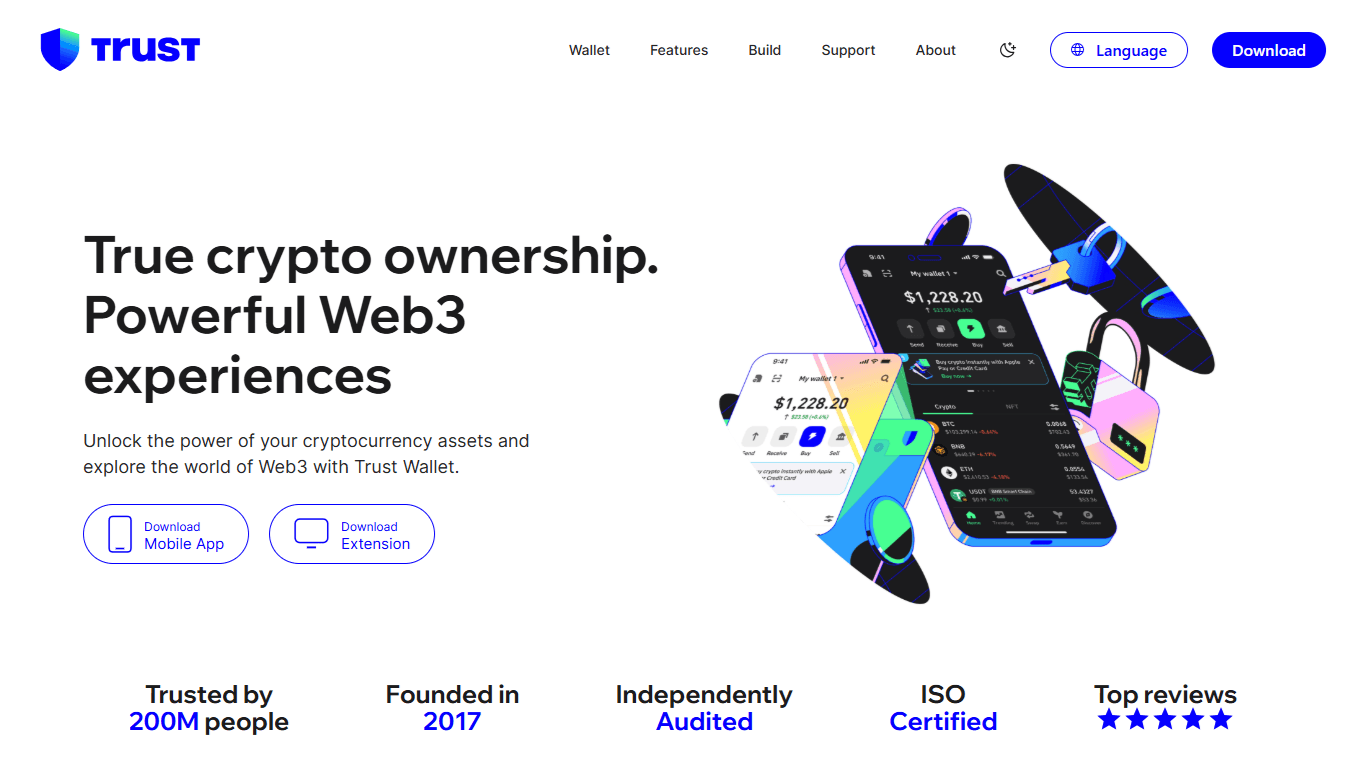
Trust Wallet’s dashboard provides a complete snapshot of your crypto assets:
Portfolio Overview
You’ll see:
Total asset value
Balance for each token
Price charts with market updates
Recent activity
Token Search and Management
You can search from a massive database of tokens or manually add custom tokens using contract addresses.
Settings and Preferences
Users can:
Enable dark mode
Adjust security settings
Set transaction preferences
Manage networks
The layout is clean, ensuring fast navigation even for first-time users.
5. How to Receive and Send Crypto
Receiving Cryptocurrency
Choose the cryptocurrency you want to receive.
Tap Receive.
Copy your wallet address or use the QR code.
Share it with the sender or paste it into the exchange you’re withdrawing from.
Trust Wallet will automatically display addresses in the correct blockchain format if the token is supported.
Sending Cryptocurrency
Select the token.
Tap Send.
Paste the recipient’s address.
Choose a network fee.
Confirm your transaction.
Transactions are usually confirmed within minutes, depending on network traffic.
6. Swapping Tokens Directly Within Trust Wallet
Trust Wallet makes it possible to convert one cryptocurrency into another without using centralized exchanges.
You can swap:
ERC-20 tokens
BEP-2 tokens
BEP-20 tokens
Many cross-chain assets
Trust Wallet handles the transaction securely while maintaining full decentralization.
For tokens not supported by the built-in swap interface, users can access DEX platforms such as:
Uniswap
PancakeSwap
1inch
QuickSwap
Trader Joe
These are accessed using the built-in Web3 browser.
7. Staking & Earning Crypto Rewards
One of Trust Wallet’s strongest features is its staking system.
Supported staking coins include:
BNB
Cosmos (ATOM)
Solana (SOL)
TRON (TRX)
Kava (KAVA)
Tezos (XTZ)
When staking:
Your tokens remain in your control
Rewards accumulate automatically
You can choose validators
You can unstake whenever network rules allow
This makes Trust Wallet an excellent tool for earning passive income.
8. Trust Wallet as an NFT Hub
Trust Wallet supports NFTs on major networks like:
Ethereum (ERC-721, ERC-1155)
BNB Smart Chain
Polygon
You can:
Store NFTs
View them in gallery mode
Send and receive collectible tokens
Connect to NFT marketplaces through dApps
This makes the wallet ideal for gamers, collectors, and digital art investors.
9. Web3 dApps and Decentralized Finance
The built-in dApp browser gives users access to numerous decentralized services.
Popular dApps Users Explore Through Trust Wallet
DEXs: Uniswap, PancakeSwap, Raydium
Lending platforms: Aave, Venus, JustLend
Yield farming: Beefy Finance, Yearn
NFT markets: OpenSea, Magic Eden
Gaming: Axie Infinity, DeFi Kingdoms
Trust Wallet ensures that private keys never leave your device, even when interacting with DeFi and Web3 platforms.
10. Security Features and Safety Tips
Trust Wallet includes several built-in protections:
Security Tools
Local encryption for private keys
Biometric login (fingerprint/Face ID)
Passcode protection
Offline seed phrase storage
No centralized server storing wallet data
Best Practices for Users
Never share your recovery phrase
Use a strong device passcode
Avoid connecting to suspicious dApps
Double-check token contract addresses
Never store your seed phrase online
Back up your recovery phrase in multiple offline locations
Your security depends on how you manage your seed phrase — treat it like a master key.
11. Common Trust Wallet Errors & Fixes
Missing tokens
You may need to:
Add the token manually
Refresh the network
Switch chains
Pending transactions
This happens when:
Gas fees are too low
The network is congested
Solution:
Speed up or replace the transaction if supported
Sent to wrong chain
Some assets can be recovered depending on compatibility and private key access.
Wallet not syncing
Try:
Restarting the app
Updating your phone
Refreshing blockchain data
Lost device
As long as you have your seed phrase, you can recover your wallet.
12. Who Trust Wallet Is Best For
Trust Wallet works well for:
New crypto users
Investors building long-term portfolios
Traders swapping assets
NFT collectors
DeFi users interacting with Web3
People who want full ownership of their crypto
It’s designed to be both simple and powerful, making it one of the most versatile crypto wallets available.
13. Final Thoughts
Trust Wallet continues to be one of the most complete and user-friendly crypto wallets in 2025. With support for countless blockchains, secure private key storage, smooth sending and receiving, fast swapping, NFT compatibility, and deep integration with Web3, Trust Wallet gives users the freedom to manage digital assets on their own terms.
Whether you're looking to store Bitcoin securely, explore DeFi apps, stake tokens for rewards, or collect NFTs, Trust Wallet is a reliable, decentralized, and feature-rich solution that puts you fully in control.